 BoltLab
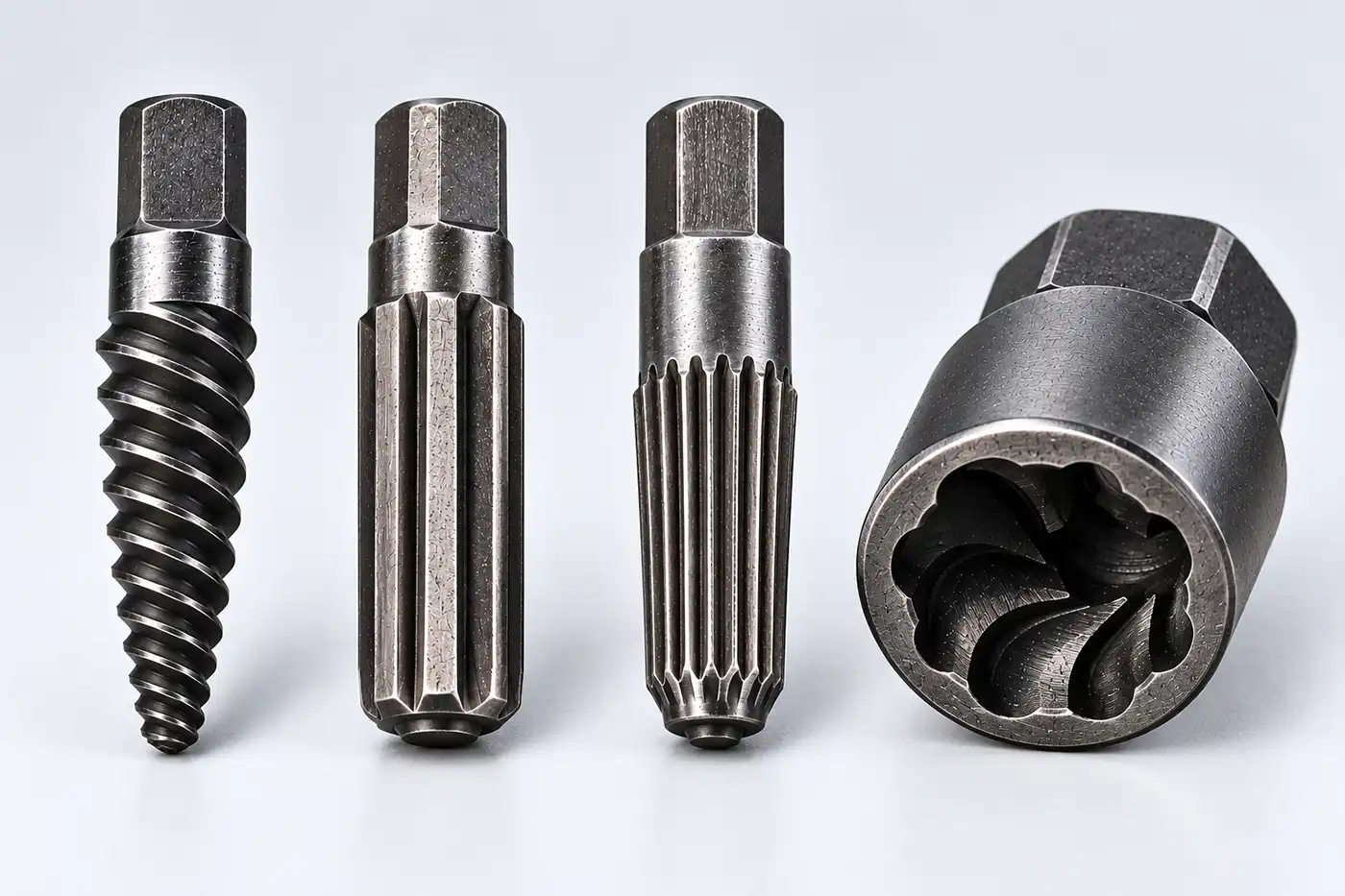
Screw and Bolt Extractor Types: Spiral, Straight, Multi-Spline, and Socket
Extractors come in several designs. Manufacturers such as Irwin describe straight-flute, spiral-flute, multi-spline, and external (socket-type) designs, each aimed at different situations.
Extractor sizing is specified by each manufacturer; follow the instructions for that particular set.
Safety first. If this fastener is part of brakes, steering, suspension, airbag or restraint systems, fuel or pressurised systems, or lifting or load-bearing structure, do not use DIY extraction guidance. Get qualified service.
Wear eye protection when working with tools. Read the Disclaimer.
Sizing is set by each manufacturer
Extractor sizing is specified by each manufacturer; follow the instructions for that particular set. This page gives no sizes, drill diameters, or pairings. Different sets use their own numbering and their own instructions, so do not assume a number or size from one set applies to another.
Straight-flute extractors
Irwin describes its straight-flute extractors as extracting without expanding material, as ideal for pipes and fittings, and as working on left-hand or right-hand threads. These are the manufacturer's own descriptions of its products, not independent test results; other makers' designs may differ.
Spiral-flute extractors
Irwin says its spiral designs bite into harder materials with increasing torque, with flutes that embed deeper with each turn. These are the manufacturer's own descriptions of its products, not independent test results; other makers' designs may differ.
Multi-spline extractors
Irwin describes its multi-spline designs as low-profile for use in confined areas, as providing the most torque of its internal extractors, and as engaging the fastener without a deep hole. These are the manufacturer's own descriptions of its products, not independent test results; other makers' designs may differ.
External (socket-type) extractors
Irwin describes a bolt extractor that engages rusted, painted-on, and stripped-out bolts and grips broken, worn, or stubborn fasteners. It works on the outside of the fastener rather than in a drilled hole. These are the manufacturer's own descriptions of its products, not independent test results; other makers' designs may differ.
Stud extractors work differently
Stud-gripping tools clamp the exposed shank of an intact stud rather than being driven into a drilled hole. They need enough sound shank to be reached.
What extractors share
Extractors are made of hardened steel and can break, and a broken extractor makes the job harder. The designs that are driven into a drilled hole depend on that hole being lined up with the fastener's own axis; drilling off-centre or at an angle can damage the surrounding threads or the part. Wear eye protection when working with tools.
What to check in the manufacturer's instructions
Choosing between designs
This page does not rank extractor designs or say which suits which fastener. The Fastener Extraction Method Finder describes general approach categories only.
FAQ
Can I use the same extractor number from different brands?
Do not assume so. Extractor sizing is specified by each manufacturer; follow the instructions for that particular set.
Which extractor type is best?
This page does not rank extractor types. Manufacturers describe different designs for different situations, and results depend on the fastener, the part, and how carefully the tool is used.
Do extractors break?
Yes, they can. Extractors are made of hardened steel and can break, and a broken extractor makes the job harder.