 BoltLab
Rounded Bolt Head vs Stripped Screw Drive: How to Tell the Difference
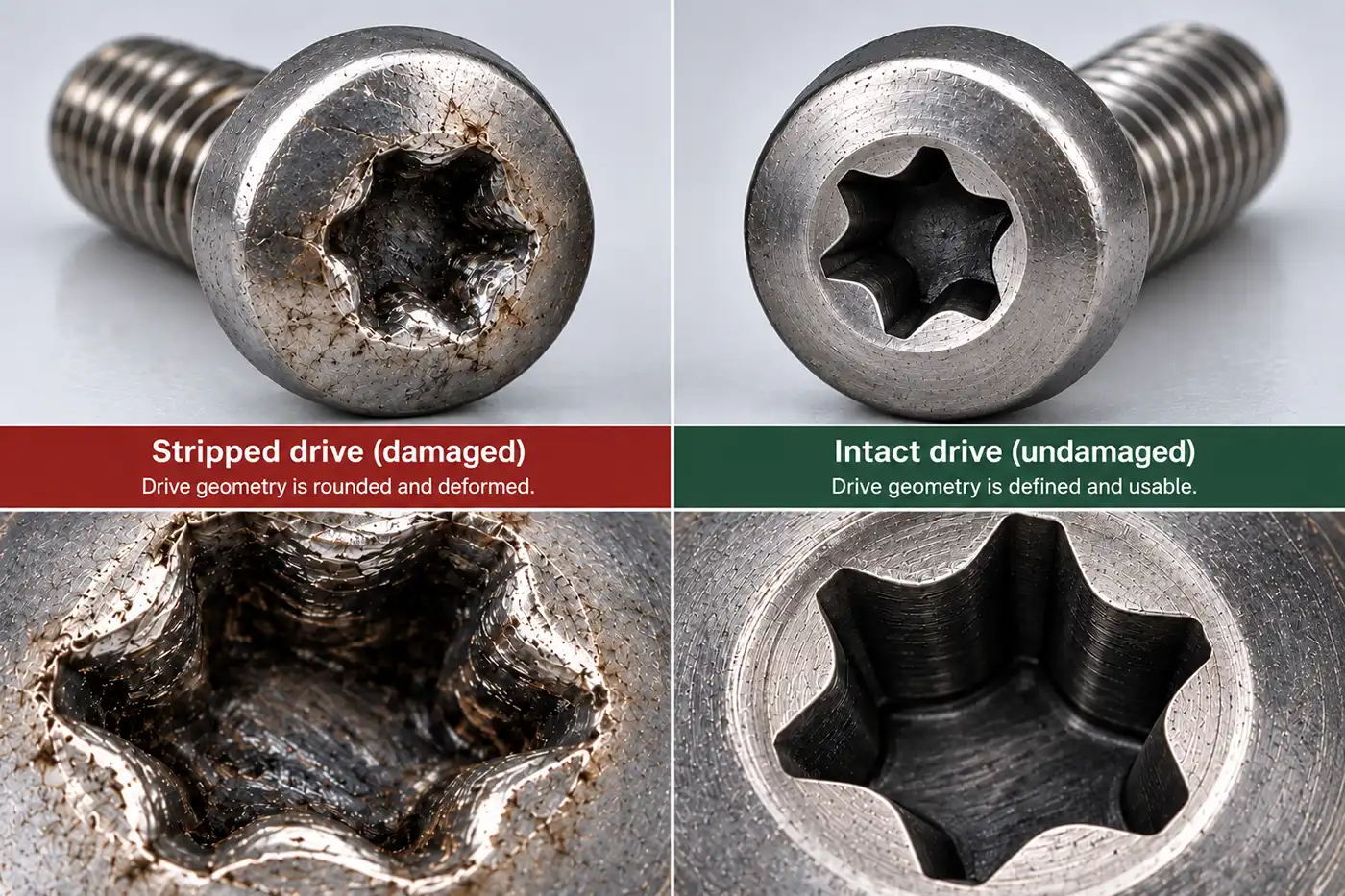
With a rounded head, the outside of the head is worn so a wrench or socket slips. With a stripped drive, the recess in the head is worn so a bit or key slips, while the outer head can still be intact.
They are different conditions, and which one you have changes which categories of approach apply. This guide does not give step-by-step removal instructions.
Safety first. If this fastener is part of brakes, steering, suspension, airbag or restraint systems, fuel or pressurised systems, or lifting or load-bearing structure, do not use DIY extraction guidance. Get qualified service.
Wear eye protection when working with tools. Read the Disclaimer.
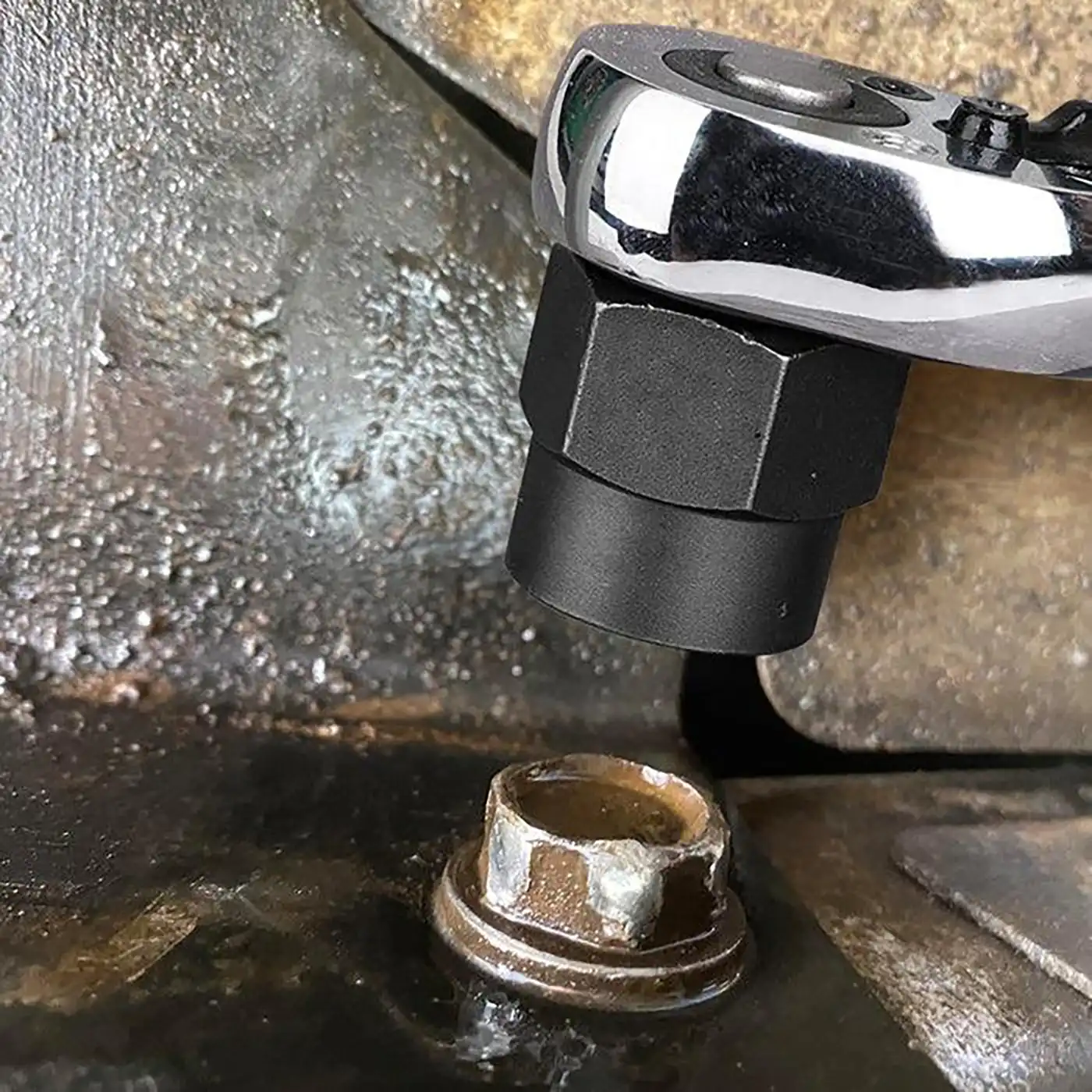
Rounded external head
The corners or flats on the outside of a bolt or nut head are worn, so a wrench or socket slips instead of turning it. Some manufacturers describe tools that grip the outside of a worn head, such as extractor sockets; Irwin, for example, describes a bolt extractor for rusted, painted-on, and stripped-out bolts. These need enough of the head's outside surface left and room for the tool to fit around it. Pushing harder can round the head further.
Stripped screw drive
The recess in the head (Phillips, Torx, hex, and similar) is worn, so a bit or key slips or spins in it while the outer head looks fine. What applies depends on what the bit does:
How to tell the difference
Stuck is not the same as damaged
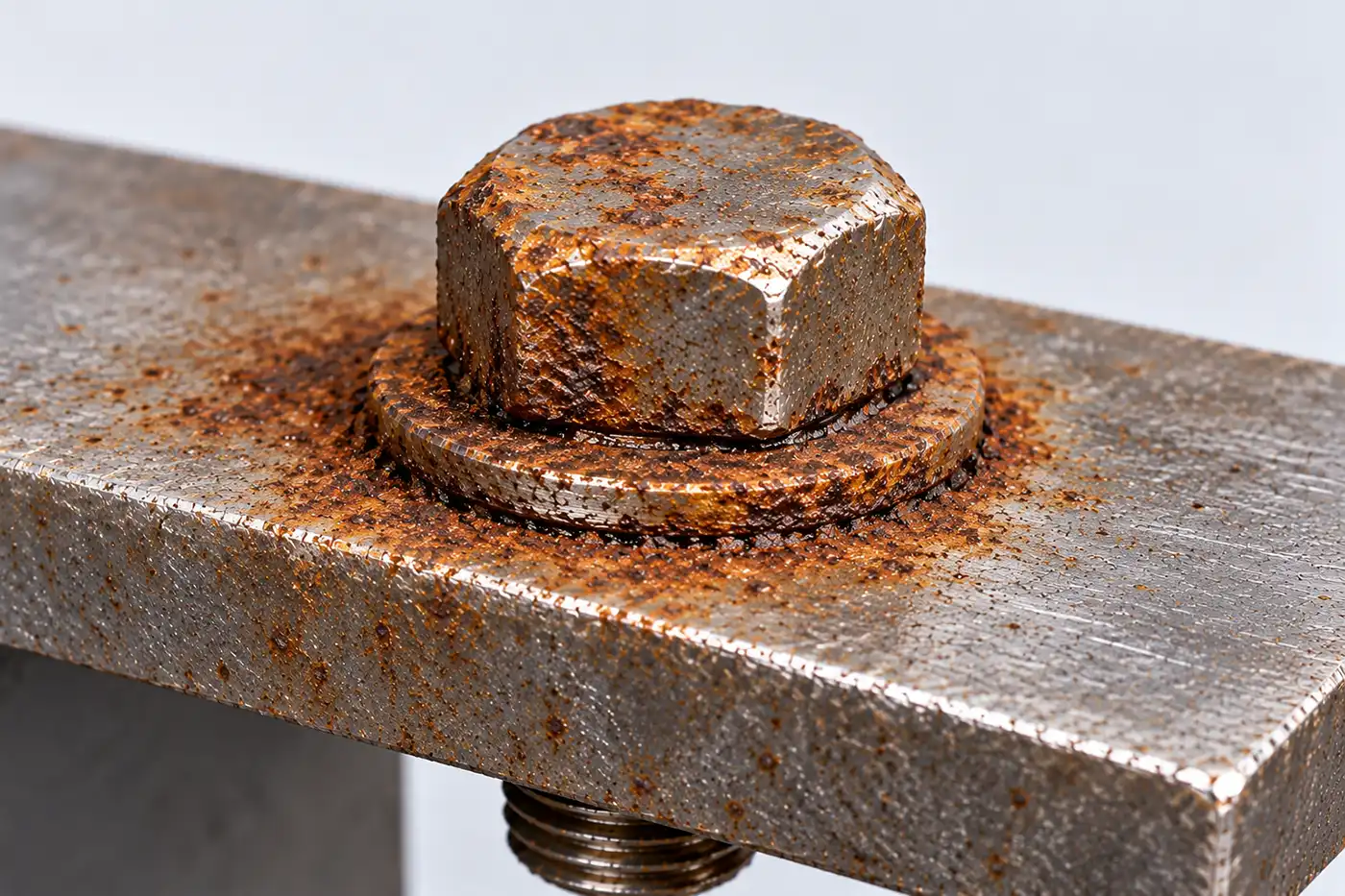
A fastener can be stuck without any damage to its head or drive, and a damaged head or drive can be on a fastener that would turn easily. Corrosion can contribute to a fastener seizing, but visible rust alone does not show whether it will turn.
Applying penetrating lubricant before using force is commonly tried first on a stuck fastener; results vary and nothing is guaranteed. Forcing a stuck fastener can round its head, strip its recess, or break it.
When it becomes a broken-fastener problem
If the head shears off or only the shank remains, the condition has changed. See Broken Bolt: Protruding, Flush, or Recessed and the extractor types reference.
FAQ
Why does my wrench slip?
A wrench or socket slips when the outside of the head is worn or rounded, or when the tool does not fit the head properly. If the slipping happens inside the recess instead (a screwdriver, bit, or key), the drive is stripped.
Is a stripped drive recoverable?
It depends on the condition. If the bit still seats, people try ways of improving the grip, which can also make the recess worse. If the recess gives no bite at all, other categories apply, described above. Nothing here guarantees a result.
Does rust mean it is seized?
No. Corrosion can contribute to a fastener seizing, but visible rust alone does not show whether it will turn. Applying penetrating lubricant before using force is commonly tried first on a stuck fastener; results vary.