Screw head types
What is a screw head? A screw head is the portion of the fastener above the shank that carries the drive (or external wrenching flats) and bears on the workpiece or countersink. Head shape determines load distribution and flush vs. proud fit.
Use this visual dictionary to recognize common head styles—the part that holds the drive and bears on your workpiece. Head shape is separate from drive type (Phillips, Torx, etc.) and from thread type. For how the head sits on the surface, see head shape profiles.
Head comparison
Approximate grouping for identification—actual standards vary by product line.
| Head type | Torque / bearing | Typical use | Common materials |
|---|---|---|---|
| Hex (external) | High wrench torque | Structure, machinery, automotive | Alloy steel, carbon steel |
| Pan | Moderate; above surface | Machine screws, sheet metal | Steel, stainless steel |
| Truss | Wide low bearing | Thin sheet, covers | Steel, stainless |
| Countersunk (flat) | Flush bearing | Finished surfaces, hinges | Steel, brass, stainless |
| Oval | Flush seat + decorative dome | Trim, hardware | Brass, steel |
| Round | Dome above surface | Legacy, decorative | Steel, brass |
| Fillister | Tall side walls | Precision, counterbores | Steel |
| Wafer | Thin wide bearing | Panels, sheet metal | Zinc-plated steel |
Countersunk Heads
Sit in a countersink for a flush or near-flush finish. Flat and oval are common in finished hardware; bugle heads are typical on drywall screws.
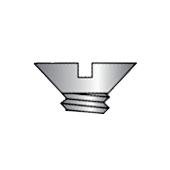
Flat Head
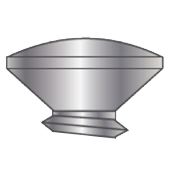
Oval Head
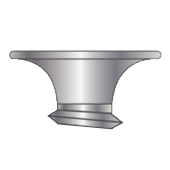
Bugle Head
Pan / Round Heads
Heads that sit above the surface—domed or stepped profiles for bearing area and clearance. Fillister heads are taller for deep counterbores.
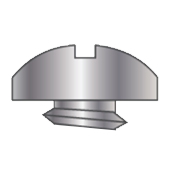
Pan Head
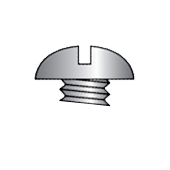
Round Head
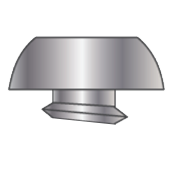
Button Head
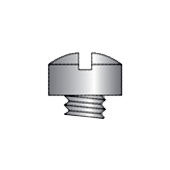
Fillister Head
Hex Heads
External wrenching: sockets and wrenches. Washer and flange faces spread load and aid seating.
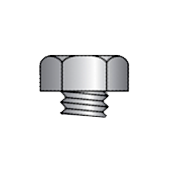
Hex Head
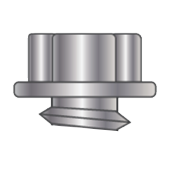
Hex Washer Head
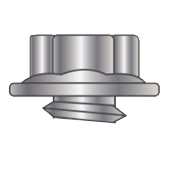
Hex Flange Head
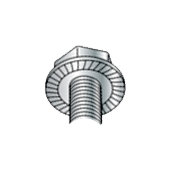
Serrated Flange Head
Low Profile Heads
Wide bearing area with shallow height—common in sheet metal, panels, and thin materials.
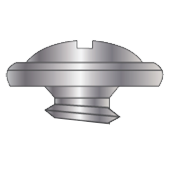
Truss Head
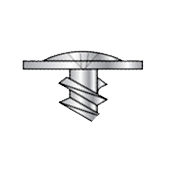
Modified Truss Head
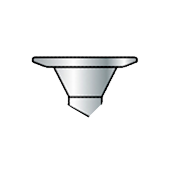
Wafer Head
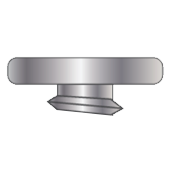
Pancake Head
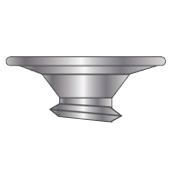
Large Wafer Head
Specialty Heads
Less common profiles for specific bearing, finish, or clearance needs.
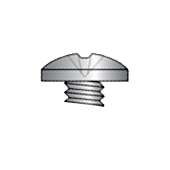
Binding Head
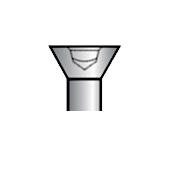
Trim Head
Undercut Head
Illustration coming soon
Use with BoltLab
Tools
Charts
Guide
FAQ
What is the difference between a pan head and a flat head screw?
A pan head sits above the surface with a rounded skirt; a flat (countersunk) head tapers into a countersink so the top can sit flush or below the surface.
What screw head is used with a wrench?
External hex heads and some flange heads are turned with a wrench or socket. Internal hex (Allen) uses a key inside the head.
What is a truss head screw used for?
Truss heads have a wide, low profile for a large bearing area—common in sheet metal, thin materials, and where a low dome is needed.
How do I match thread size after identifying the head?
Use the Thread Identifier with diameter and pitch measurements, or the universal screw size chart for common metric and imperial sizes.
Industry overviews of head styles and drives appear in resources such as EJOT’s guide to head styles and drives (self-drilling screws context).
Also read
Reference: Screw drive types, Head shape profiles
Guides: Bolt vs Screw, Bolt Head Markings