Thread types
What is a thread type? A thread type is the specification family for the helical ridge—ISO metric, unified (UNC/UNF/UN8), pipe threads, or specialty forms. It is defined by diameter, pitch (or TPI), and form, not by head shape or drive.
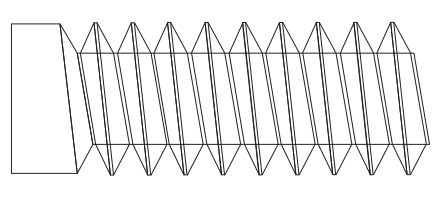
ISO metric (M)
60° flank angle; diameter in millimeters with pitch stated (e.g. M8 × 1.25).
Default: coarse tables per diameter; fine for special fits.
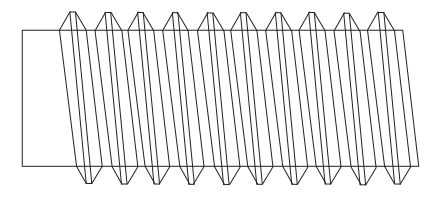
Unified coarse (UNC)
Inch series with fewer TPI per size; common on imperial hardware and consumer products.
Callout example: ¼-20.
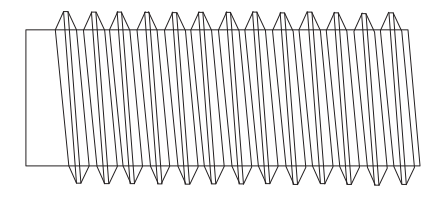
Unified fine (UNF)
More TPI than UNC for the same nominal diameter; used where vibration or thinner walls matter.
Always verify with pitch gauge or count.
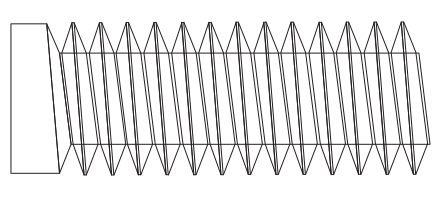
Metric fine
Smaller pitch than coarse for the same M size—used in thin walls, adjustment screws, and some automotive.
Requires pitch measurement; do not assume coarse.
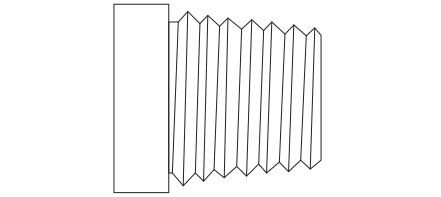
Pipe threads (e.g. NPT)
Sealing taper threads for pressure-tight joints—not interchangeable with straight machine threads.
Identify by taper gauge and application, not by diameter alone.
Comparison
Approximate grouping for shop identification. Always confirm against the mating part or standard.
| Type | Pitch style | Typical use | Identify by |
|---|---|---|---|
| ISO metric coarse | Pitch in mm per ISO tables | General machinery, global hardware | M callout + pitch (e.g. M6 × 1) |
| ISO metric fine | Finer pitch than coarse | Thin material, adjustment | Pitch gauge vs. coarse table |
| UNC | Coarse TPI series | Imperial general assembly | TPI count + major Ø |
| UNF | Fine TPI series | Vibration-critical inch joints | Higher TPI than UNC same size |
| NPT (pipe) | Tapered sealing form | Fluid connections | Taper, thread sealant practice |
Differences and selection
Coarse vs fine trades speed of engagement, stripping resistance, and vibration locking. Metric vs unified is largely regional and tooling inventory—interchange is not assumed across systems.
Applications
Pick thread type from the application standard (automotive service manual, drawing, or replacement part). When unknown, measure major diameter and pitch, then map to a standard row in the size chart.
Identify yours
Measure first, then map to a standard.
Tools
Charts
Guide
FAQ
What is the difference between UNC and UNF?
Same inch diameter series; UNF has more threads per inch (finer) than UNC.
When should I use metric coarse vs fine?
Use coarse unless the drawing or mating part specifies fine pitch.
How do I identify my thread type?
Measure major Ø and pitch/TPI, then use the Thread Identifier or charts.
What is the difference between thread type and screw drive?
Thread type is the helical engagement along the shank; drive type is only the head interface.
What is a thread type in one sentence?
The named standard family (metric, unified, pipe, etc.) that defines diameter, pitch/TPI, and form for the helical thread.